
Cracks Spidering Across Your Asphalt Court After a Few Winters? Why Freeze-Thaw Does It
Quick Answer: Spider-cracking on an asphalt court is the surface telling you the freeze-thaw cycle has gotten into it. Water works into tiny openings, freezes and expands roughly nine percent, and pries the crack wider a little more with every cold snap. At the same time the asphalt binder is aging and turning brittle, and moisture in the base below is heaving and settling the slab as the ground freezes and thaws. A hairline from one fall can be a real crack by spring. Patching the top only slows it; the lasting fix works the crack, controls the water in the base, and resurfaces on a schedule that matches a short northern season.
You walk out to the court on a spring morning, the snow is finally gone, and where last year there was one thin line near the baseline, now there is a web of them fanning out like cracked glass. Run your thumbnail across it and you can feel the edges have lifted. It looks like the whole surface aged five years over one winter, and in a way it did.
That map-like pattern of fine cracks branching into each other has a name on the trades side, spider-cracking, and on an asphalt court in central and northern Minnesota it almost always traces back to the same driver: the freeze-thaw cycle. It is not a sign you did something wrong. It is the predictable result of water, cold, and time working on a flexible pavement in a climate that swings across the freezing mark dozens of times a year. Understanding what is actually happening, on the surface and down in the base, is what tells you whether you are looking at a quick seal, a resurface, or something deeper.
What Spider-Cracking Actually Is
Not every crack means the same thing, so it helps to read the pattern before you decide anything.
A network, not a single split
A long, straight crack running the court's length usually points to a seam below. Spider-cracking is different. It is a cluster of shorter, interconnected cracks that branch and spread across an area, telling you the surface itself has lost its flexibility.
Hairlines that grow with the seasons
The cracks you see in spring were frequently barely visible the previous fall. Water found the opening, froze inside, and levered it wider. Because the growth happens over the cold months when nobody plays, it seems to appear all at once.
Edges that lift and catch
As a crack opens, the sides no longer sit flush. You get a small lip, and that lip catches a toe, changes a ball bounce, and lets more water down into the crack. Once the edges lift, the problem accelerates.
Why Freeze-Thaw Is So Hard on an Asphalt Court
The cycle does its damage through a few mechanisms at once, which is why a northern climate is tougher on a court than a hot one.
Water expands when it freezes
When water crystallizes into ice, its volume grows by a little over nine percent. Confined inside a tight crack, that expansion generates enormous pressure and pries the walls apart. Multiply that across dozens of freeze-thaw swings and the widening adds up fast.
Aging asphalt turns brittle
Asphalt is flexible when young, but the binder holding the mix together oxidizes over the years. As the surface hardens and loses its give, it can no longer flex with temperature swings, so it fractures in that branching spider pattern instead.
Dark surface and white lines pull against each other
The playing colors absorb heat and warm the asphalt beneath, while bright white lines reflect sun and stay cooler. The surface under the color expands more than the surface under the lines, and that constant mismatch works cracks open along the lines.
What Is Happening Below the Surface
The cracks you see are only half the story. The base under the court is going through its own freeze-thaw season, and it moves the whole slab.
Frost heave lifts the slab unevenly
Frost heave needs frost-prone soil, freezing ground temperatures, and water in the base. When those align, growing ice lenses lift everything above them. Because soil and moisture are never uniform, that lift is uneven, and the rigid surface bends and cracks.
The spring thaw leaves the base weak
When the surface thaws in spring but the ground below stays frozen, meltwater gets trapped between. The base turns saturated and soft, its support for the slab drops, and the surface above becomes most vulnerable to cracking under any load.
Trapped water is the part that keeps hurting
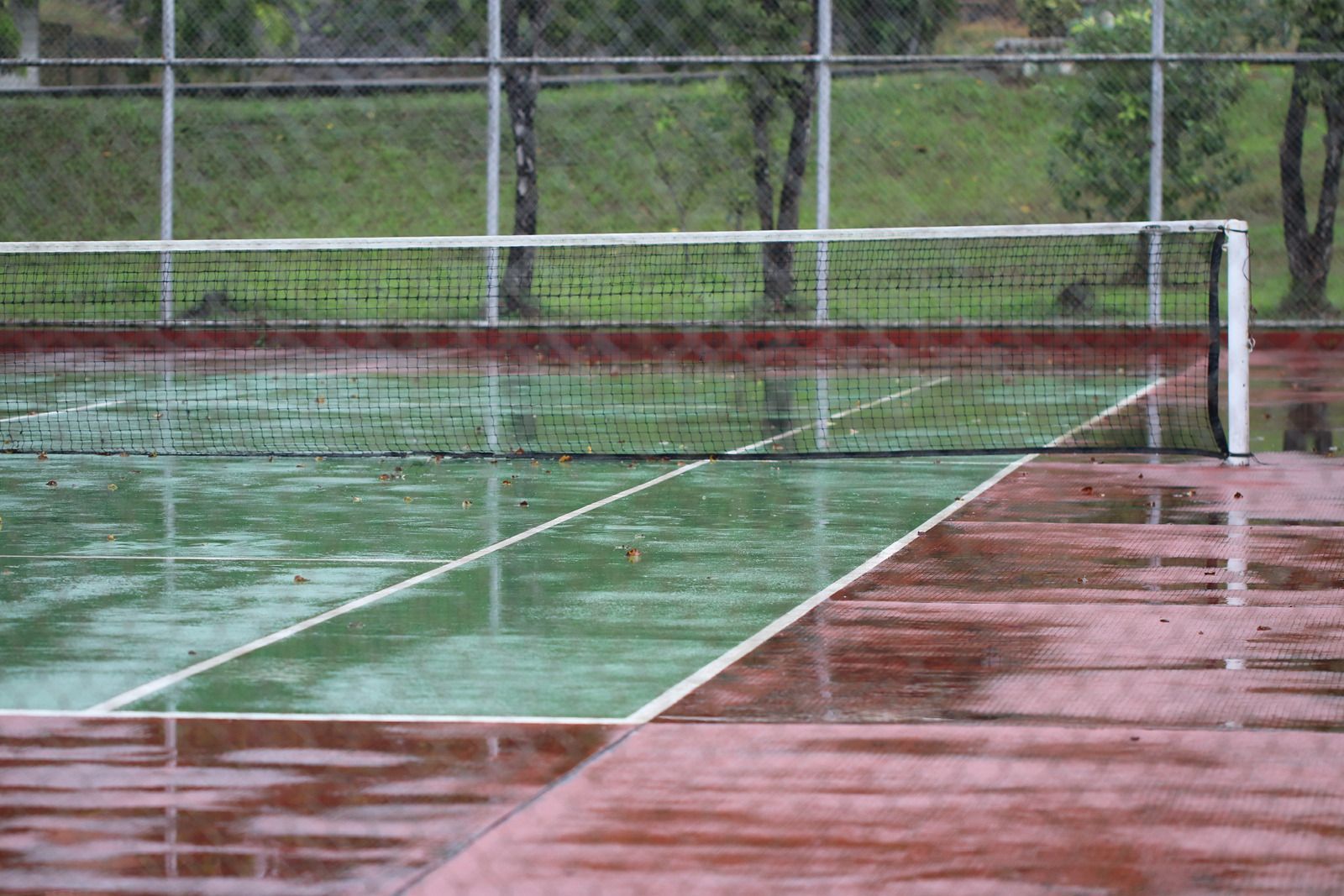
Every one of these mechanisms depends on water being where it should not. Water in the base freezes and heaves, saturates and weakens, and widens each crack. Controlling that water is the single biggest lever you have here.
TIP: The best time to deal with cracks is the dry stretch before the ground freezes. Sealing open cracks in late summer or early fall keeps water from getting in and freezing over the winter, which slows how fast they spread. Going into the cold with cracks left open is what turns a small problem into a big one by spring.
Why the Cracks Keep Coming Back After You Patch
Plenty of owners fill the cracks, feel good about it, and then watch the same lines reopen the next spring. There are reasons for that.
Acrylic fillers move with the weather
A standard acrylic crack filler seals the opening and keeps water out, which is worth doing, but it is not a rigid permanent bond. As the crack opens in the cold and closes in the warmth, the filler flexes and can let go on one side. It is normal to see a filled crack look open on a cold morning and tighter by afternoon. These materials buy time and block water; they do not stop the underlying movement.
Old cracks telegraph up through new coatings
If a court is simply coated over without addressing the cracks properly, the movement in the crack below eventually reflects right up through the new surface in the same place. The court looks fresh for a season, then the old pattern reappears. That reflected cracking is one of the most common reasons a cosmetic-only fix disappoints.
Surface fixes cannot outrun base movement
When the real driver is frost heave and a moving, moisture-laden base, no amount of surface filler will hold. The base keeps lifting and settling, the surface keeps being asked to bend, and the cracks keep returning. That is the signal that the fix has to go deeper than the top layer.
WARNING: Water pooling in the same low spots after every rain is not just a nuisance, it is feeding the cracking. Standing water works into the base, freezes, and heaves the slab, so ignoring drainage while you keep patching the top is spending effort on the symptom instead of the cause. If a court holds water, that gets addressed before any new surface is worth putting down.
How the Damage Gets Read and Addressed
Because the same spider pattern can come from a tired surface or from a moving base, sorting out which one you have is the whole job.
Read the crack pattern and the water first
A close look at how the cracks branch, how wide and how deep they run, whether the edges have lifted, and where water sits after a rain tells an experienced eye whether this is an aging surface that needs resurfacing or a base and drainage problem that needs correcting before anything goes on top. Skipping that read is how people end up coating over a problem that comes right back.
Membrane systems bridge cracks that still move
When the base is sound but the surface has working cracks, a flexible membrane or fabric-reinforced crack repair can bridge the opening and spread the movement across a wider area instead of letting it concentrate in one line. Done under a resurface, that adds years before the pattern shows again. It is the middle path between a throwaway patch and a full rebuild.
Timing the work to a short season
Court coatings need warm, dry conditions to cure correctly, which in this part of Minnesota means the window from late spring into early fall. Cold nights, frost, or rain during the cure can ruin an otherwise good resurface, so the work gets planned around the forecast and the calendar. In a short northern season that planning is not a detail, it is what makes the repair last.
Frequently Asked Questions
Is spider-cracking on my asphalt court something I caused?
Almost never. It is the normal result of freeze-thaw cycles acting on an aging, flexible surface. Water seeps in, freezes, expands, and the brittle surface fractures. Good maintenance slows it, but the climate does the driving.
Can I just fill the cracks myself and be done with it?
Filling cracks keeps water out and slows their spread, worth doing before winter. What it will not do is stop the movement underneath. Filler alone is a holding action, not a permanent cure for that.
Why do the cracks look worse in spring than they did in fall?
Because the damage happens over winter when no one is on the court. Water sits in each crack, freezes, and pries it wider, while frost heave lifts the slab. It all shows at once.
Does standing water really matter that much?
Yes. Water in and under the court is what freezes, expands, and heaves the slab, widening every crack it reaches. Correcting drainage and grading is often the most important step, and skipping it undermines any resurfacing.
How long should a resurfaced asphalt court last up here?
In this climate a properly resurfaced court generally holds several years before needing attention, though hard freeze-thaw cycles and sun shorten that. Sealing cracks and resurfacing on a regular cadence pushes you toward the longer end.
When is the right time of year to do the work?
The warm, dry stretch from late spring into early fall. Coatings need reliably warm, dry conditions to cure, so frost is the enemy. Because the northern season is short and books up, plan work early.
Keeping Your Court Playing True Through the Freeze
Spider-cracking is not random and it is not a verdict that the court is finished. It is a readable signal that freeze-thaw has gotten into a surface and a base that were never going to escape a northern winter untouched. The water expands and pries, the aging asphalt turns brittle and fractures, and the base heaves and settles beneath it all. Once you know that, the right response follows: seal before the freeze, keep water out of the base, read whether the trouble is the surface or what is under it, and resurface on a schedule built around a short season rather than reacting to whatever the last winter left behind. Do that and the court plays true for years instead of aging a season at a time.
Have your cracked court read before another winter gets into it — A court that plays true and lasts through Minnesota winters starts with knowing whether your spider-cracking is a tired surface or a moving, water-logged base underneath. Our crew reads the crack pattern and the drainage, bridges working cracks with flexible membrane systems, corrects the water problems that heave a slab, and resurfaces in the warm, dry window so the coating cures right. With 100
years of combined experience serving Northern and Central Minnesota across residential and commercial courts, and satisfaction guaranteed, Outdoor Specialties
can tell you what your surface actually needs. Reach out to schedule a court assessment before the freeze returns.