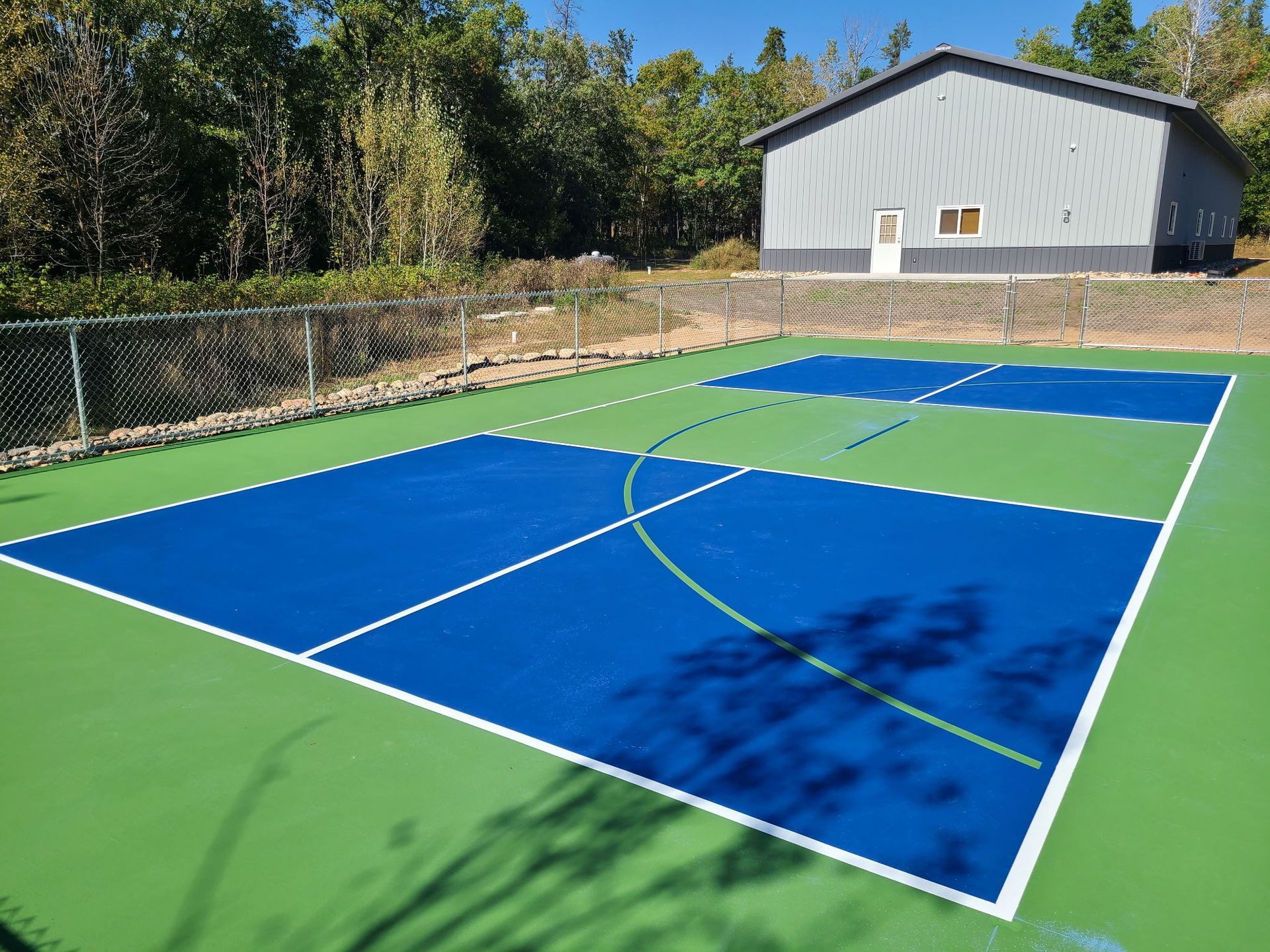

Asphalt or Post Tension Concrete Court for Hard Freeze Thaw Winters? Which One Lasts
Quick Answer: In a hard freeze thaw climate, a post tension concrete court generally holds its shape longer than asphalt. Asphalt is a flexible pavement, so it moves with the ground, and over time that movement shows up as cracks that need to be routed and filled before every resurface. A post tension slab is compressed by steel tendons after it cures, which keeps it tight and lets it bridge small soil movements without telegraphing them to the surface. Asphalt still makes sense when the site is very well drained, the soil is stable, and you accept a regular crack repair routine. The deciding factors are your soil, your drainage, and how much crack maintenance you want to sign up for every few years.
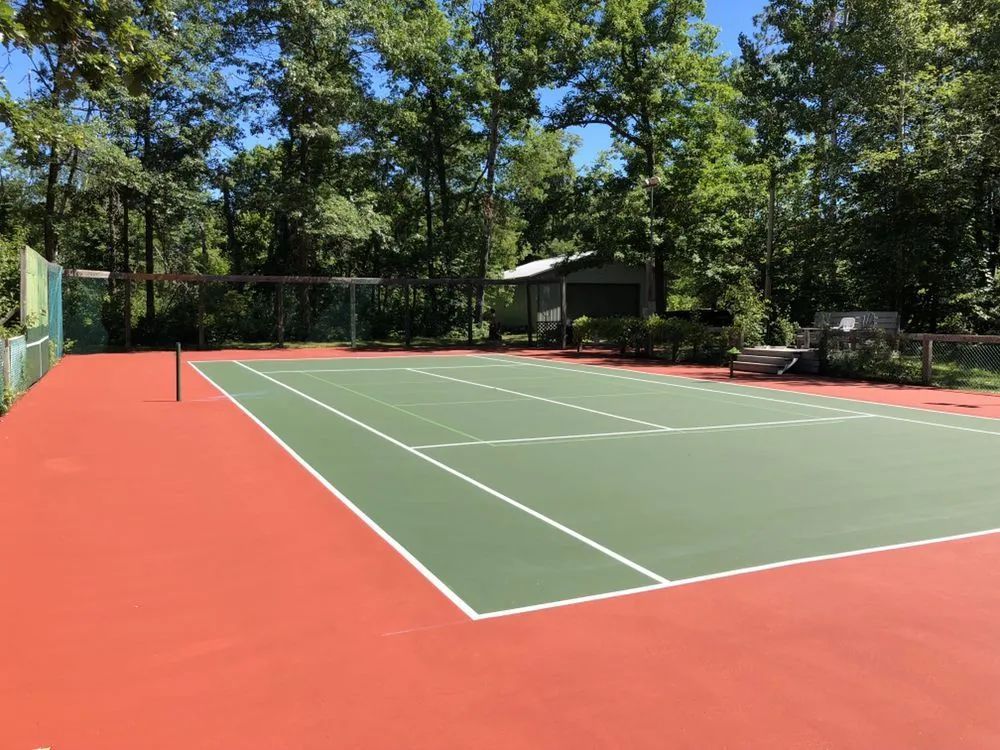
You walk the court in early May, right after the last of the snow pulls back from the fence line, and you start counting. One crack by the net, another along the baseline, a faint ridge running across the service box that was not there in October. If you are planning a new court, or thinking about tearing out an old one, you probably have the same question on your mind: would a different kind of slab have avoided all this?
It is a fair question, and in Central and Northern Minnesota it deserves a real answer instead of a sales pitch. Both asphalt and post tension concrete can make a great court. They just behave very differently when the ground freezes, heaves, and thaws, and a court sits right on top of that ground with nothing to hide behind. Here is how each one actually performs through our winters, so you can match the material to your site.
What Freeze Thaw Does to Any Court Slab
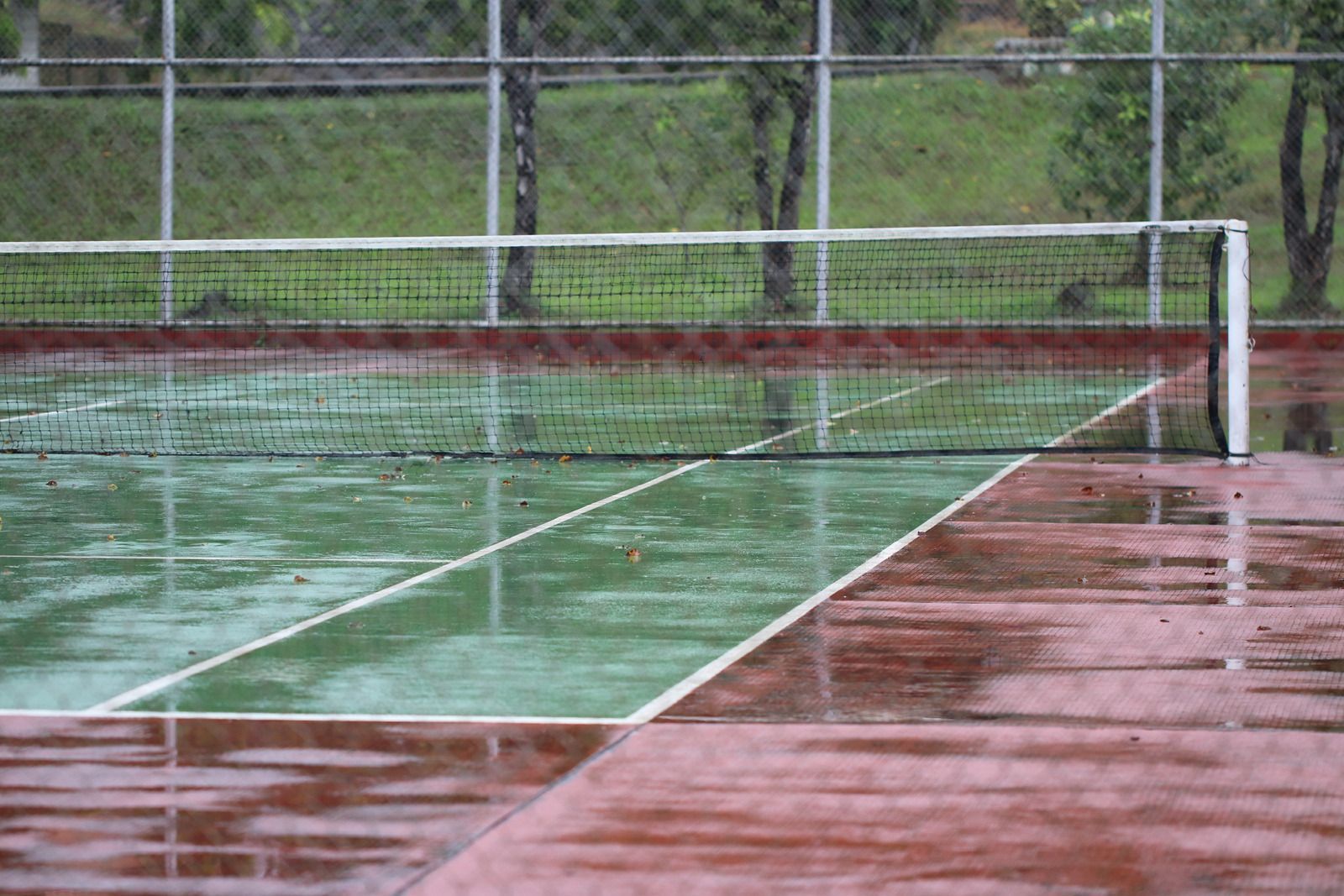
Before comparing materials, it helps to understand the force they are both up against. Soil holds moisture. When temperatures drop below freezing, that moisture turns to ice and expands, and in frost susceptible soils it can pull more water up from below and form ice lenses that lift the ground above them. In spring the ice melts from the top down, leaving a saturated, soft layer sitting on frozen ground that cannot drain. That is when pavement is at its weakest.
Frost Heave
Uneven ground freezing lifts waterlogged areas differently, creating ridges and cracks across long, flat court surfaces during winter.
Spring Softening
Meltwater cannot drain through frozen soil, leaving the base saturated and weakened while surface cracks allow additional moisture inside.
Repeated Cycles
Central Minnesota’s frequent freeze-thaw cycles gradually worsen weak spots, turning tiny autumn hairline cracks into visible spring damage.
The right material is the one that handles that movement best on your particular piece of ground.
How Asphalt Behaves Through a Minnesota Winter
Asphalt is a flexible pavement. That is not a flaw, it is how the material works. Flexible pavement spreads load and moves slightly with the layers beneath it, which is a big reason it has been used on roads and parking lots for so long.
On a sport court, though, flexibility has a side effect. When the base shifts even a little, the asphalt follows it, and because the binder in the mix ages and stiffens with sun exposure and cold, it eventually cannot follow without splitting. Industry court builders say plainly that cracking in a hot mix asphalt court is a matter of when, not if. Most of the cracking we see starts from the same few sources:
Reflective Cracking
Every time a crack is filled or covered, the movement underneath it continues, so the same line tends to come back through the coating.
Edge Cracking
The perimeter of the slab has less support and takes more freeze thaw movement, so cracks often start along the edges and work inward.
Base Driven Cracking
Where the stone base is thin, wet, or built over poor soil, the asphalt above it bends and breaks first.
Asphalt courts are also more dependent on what is under them. A proper asphalt court needs a thick, well compacted, free draining stone base and a surface pitched so water leaves the court quickly. When that foundation is done right, asphalt performs well. When it is not, the court tells you every spring.
TIP: Do a spring walk of your existing court right after the thaw, once the surface has dried. Mark every crack with chalk and take photos with a tape measure in the frame. Comparing the same cracks a year later shows you whether they are slowly widening or holding steady, which tells you far more than a single look ever will.
How a Post Tension Slab Is Different
A post tension court is a concrete slab with high strength steel cables, called tendons, laid in a grid inside the form before the pour. Once the concrete has cured enough, the crew pulls those tendons tight with hydraulic jacks and locks them off. The result is a slab that is held in compression across its whole length and width.
One way to picture it is a rubber band stretched around a stack of books. The band is trying to return to its original length, so it squeezes the books together. The tendons do the same thing to the concrete. Concrete is very strong when it is squeezed and much weaker when it is pulled apart, so keeping it in constant compression keeps tiny shrinkage and temperature cracks from opening up.
This changes how the court behaves in a few practical ways:
It Bridges Small Movements
A stiff, compressed slab can span minor soft spots and soil movement, reducing the likelihood of surface cracks appearing.
It Has Fewer Joints
Because the slab stays tight, it needs fewer control joints than ordinary concrete, creating a more continuous playing surface.
It Needs a Thinner Stone Section
The slab carries more load itself, requiring less aggregate depth than asphalt, although stable, well-drained subgrade remains essential.
None of that makes it indestructible. A post tension slab still sits on soil, and a poorly prepared site can still cause trouble. What it does is give you a much larger margin for error when the ground moves.
Side by Side: How They Handle Frost and Cracking
Here is the practical comparison for a court in a freeze thaw climate.
Crack Behavior
Asphalt commonly cracks over time, while post-tension slabs resist cracking because compression counteracts the tension that causes cracks.
Response to Frost Heave
Asphalt follows ground movement, developing ridges and cracks. Post-tension slabs better tolerate minor uneven heaving as rigid plates.
Surface Coating Life
Both require periodic acrylic recoating, but asphalt usually needs crack repairs first, while post-tension slabs often need simpler preparation.
Downtime
Asphalt crack repairs add days to resurfacing projects, increasing cumulative court closures throughout the surface's service life.
Overall Lifespan
Post-tension courts can serve decades with minimal structural repairs, while asphalt courts often require earlier rebuilding of surfaces and bases.
Tolerance for Imperfect Soil
Asphalt needs dependable drainage and subgrade conditions, while post-tension slabs can bridge certain soil variations that would crack asphalt.
When Asphalt Is Still the Right Call
It would be dishonest to say post tension wins everywhere. We build and repair both, and there are good reasons to choose asphalt.
If your site has naturally well drained, stable soil, sand or gravel that sheds water, with no history of soft spots or heaving, a properly built asphalt court can perform very well. A good base and a correct pitch go a long way toward keeping an asphalt court healthy for many seasons.
If you are resurfacing an existing asphalt court, the question is also different. Replacing the whole slab is a much bigger decision than recoating, and a sound asphalt court with a good base is often worth keeping and maintaining.
Asphalt is also more forgiving to repair locally. A damaged section can be cut out and patched without touching the rest of the court, which is not how a tensioned slab works. A post tension slab cannot be cut or drilled casually, because the tendons are under load. Anyone who ever needs to anchor a new post, add a light pole, or core a hole through the slab has to know where the tendons are first.
WARNING: Never drill, saw, or core into a post tension slab without the tendon layout in hand. A cut tendon is under serious tension and can be dangerous to anyone nearby, and it weakens the slab. Ask for the as built tendon drawings when the court is installed, keep them somewhere safe, and have any later post or fence work planned around them.
Building the Court Right Matters More Than the Label
Whichever material you choose, the court only performs as well as the site work under it. We see more failures traced to rushed or thin preparation than to the choice between asphalt and concrete. The things that make the biggest difference are consistent across both:
Subgrade Preparation
Remove organic soil, correct soft spots, and compact the ground in even layers to create a stable foundation.
Drainage
Proper surface slope and a well-drained base help water escape, reducing damage from repeated freezing and thawing.
Timing
Minnesota’s short construction season requires careful scheduling so concrete cures and asphalt compacts under suitable temperatures and conditions.
Curing and Tensioning for Concrete
Post-tension slabs must reach the required concrete strength before tendons are tensioned, making proper curing time essential.
Get those steps right and either material has a fair chance. Cut corners on them and neither one is safe through a Minnesota winter.
Frequently Asked Questions
Is a post tension concrete court better than asphalt in cold weather?
In most freeze thaw climates, yes. The compressed slab resists frost cracking and tolerates uneven soil better, though asphalt can still perform well on stable, well drained ground.
Will a post tension court ever crack?
It can, but it's much less likely. Tendons keep the concrete compressed, resisting forces that open cracks. Hairline shrinkage marks may appear, but not the repeating crack patterns common on asphalt.
Do both court types need resurfacing?
Yes. Both get an acrylic coating that wears under sun and play and needs regular recoating. Asphalt usually needs crack repair first, while a post tension slab generally does not.
What makes asphalt courts crack in the first place?
Asphalt is flexible and follows base and soil movement. As sun and cold stiffen the binder, it splits, and freezing water entering the cracks widens them every winter.
Can I switch from asphalt to post tension concrete later?
Yes, but it means removing the old surface and rebuilding the court. If a poor base keeps causing cracks, a rebuild fixes the cause. A site visit helps you judge.
Can I install net posts or lights on a post tension slab?
Yes, with planning. Posts, sleeves, and light footings are set before the pour, away from tendons. Later drilling requires the tendon layout so nothing under tension gets damaged.
Matching the Right Court Surface to Your Ground
The right court is the one built for the soil, water, and winters it will live with. A post tension slab gives the largest margin against Minnesota frost and the least crack maintenance, while a well built asphalt court can still serve a stable, well drained site for many seasons. Either material depends on careful subgrade work, a pitched surface, and good drainage, since shortcuts in preparation cause more failures than the choice between asphalt and concrete.
Walking the site before choosing a material keeps the decision tied to what the ground will actually do each spring. Outdoor Specialties
brings 100
years of combined experience to courts across Central and Northern Minnesota, and that background has shown that checking soil, water table, and existing cracks first leads to honest recommendations. A court planned around its site, with the right base and the right surface, is far more likely to play true through many freeze thaw winters