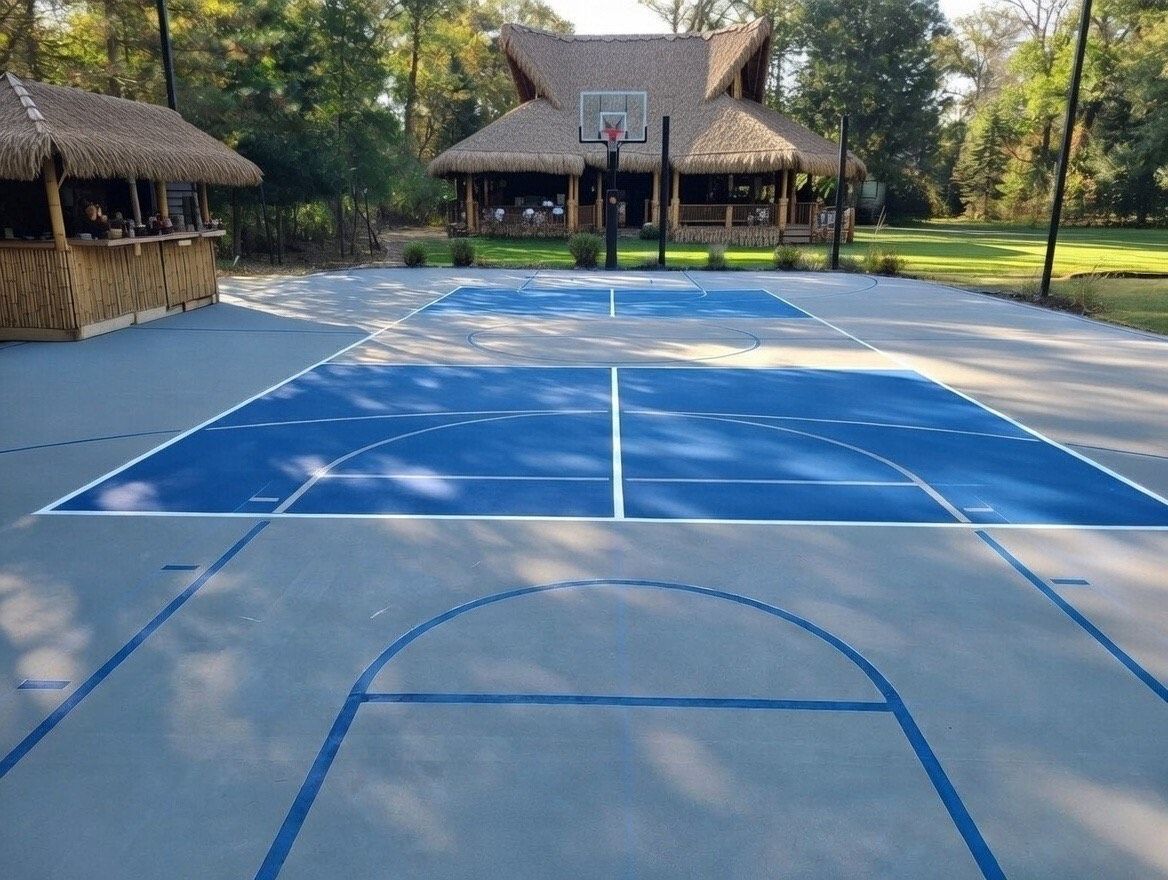

Faded Color and Slippery Spots on the Court? What the Surface Is Telling You
Quick Answer:
A court that has gone chalky, pale, or slick underfoot is showing you that the acrylic coating's binder is breaking down, usually from UV exposure combined with the sand and pigment wearing thin at the surface. Rub your hand across a faded panel and if color dust comes off on your palm, the binder holding pigment and texture in place has weakened. The same breakdown that fades the color also strips away the fine texture that gives players grip, which is why fading and slipperiness tend to show up together rather than as separate problems. Left alone, a chalking surface keeps thinning until traction and ball response both suffer, and eventually the coating cracks. Catching it at the fading stage, rather than waiting for the slick stage, is what keeps a resurface manageable instead of urgent.
How Fading and Slipperiness Reveal Coating Breakdown
You notice it on a bright afternoon, walking the baseline where the sun hits hardest. The color that used to be a deep, even green or blue has gone pale and a little gray, almost dusty looking next to the shaded strip under the net post where the original shade still holds. Then someone plants a foot for a quick direction change and their shoe skates a half-inch before it catches. Two things happening in the same spot, on the same afternoon, is not a coincidence. It is the same problem showing up two different ways.
A court's playing surface is a coating, a thin, engineered layer of acrylic resin, pigment, and sand bonded to the pavement below. That coating is doing two jobs at once: holding its color and holding its texture. When one starts to fail, the other usually is not far behind, because both depend on the same acrylic binder staying intact. Reading what the fading and the slipperiness are telling you, together, is how you catch a surface problem while it is still a coating issue and not a structural one.
What's Actually Happening to the Coating
The acrylic layer on top of your court is not paint in the wall-paint sense. It is a resin system that suspends pigment for color and silica sand for texture, and both of those only stay put as long as the resin binding them is sound.
Sunlight Breaks Down the Binder From the Top Down
Ultraviolet exposure gradually weakens the acrylic binder, loosening the pigment and sand that create color and texture. Unshaded areas typically deteriorate faster, often creating noticeable differences between sun-exposed sections and protected areas beneath windscreens or structures.
Fading Is the Visible Half of the Story
As UV exposure weakens the binder, pigment gradually loses its hold and the court's color becomes lighter. Darker shades such as deep green and blue often make this deterioration especially noticeable, revealing surface aging before more obvious damage appears.
Slipperiness Is the Half Most People Miss
The acrylic binder holds both pigment and fine sand that creates traction. As it deteriorates, surface texture gradually disappears, leaving smoother areas with less grip. A faded, chalky section may therefore also be the same area becoming increasingly slippery.
Chalking Is the Tell You Can Check With Your Hand
Rub your palm across a faded section and look for colored powder transfer. Some chalking is normal on aging courts, but widespread, heavy residue indicates weakening binder and suggests the coating has progressed beyond ordinary surface wear.
Why the Slippery Feeling Matters More Than It Looks
A court does not have to look dramatically worn to be a genuine slip risk, which is part of why this symptom gets ignored longer than it should.
Traction on a Sports Surface Is Measured, Not Guessed
Sports surfaces can be tested for traction using standardized methods that simulate slipping during movement. A worn coating can produce lower traction readings as texture disappears, helping identify surfaces that may have become too slick for safe athletic use.
Wear Is Not Uniform, and That Is the Dangerous Part
Baselines, net areas, and pivot points experience heavier foot traffic and directional stress than court edges. These high-use zones can become significantly slicker while surrounding areas still feel normal, creating hidden traction differences where players move most aggressively.
Moisture Makes a Marginal Surface Worse
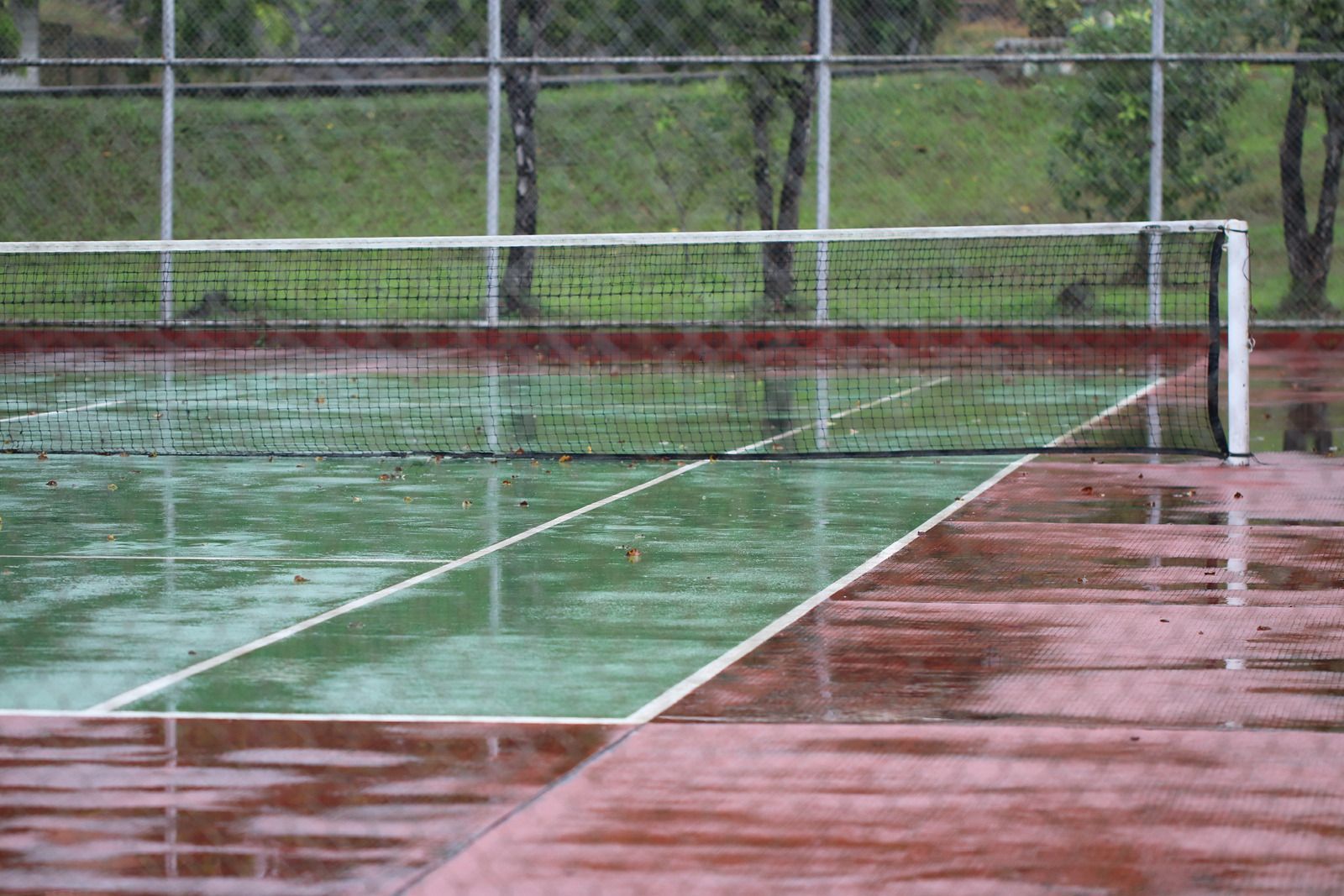
A court with borderline traction when dry can become considerably more slippery when covered with dew, rain, or trapped humidity. Shaded areas and low spots deserve extra attention because moisture can intensify traction problems on already worn surfaces.
TIP: Do the hand test and the ball-bounce test together on a dry, sunny day. Rub a faded section and check for color transfer, then drop a tennis ball or basketball from about shoulder height on that same spot and compare the bounce to a less-worn area of the same court. A dull, skidding bounce alongside visible chalking is a strong signal the coating has thinned past routine maintenance and into resurfacing territory.
What Causes a Surface to Wear This Way
Fading and slick spots do not appear evenly or at random. A few patterns explain most of what you will see if you walk the whole court.
Sun Exposure Sets the Pace
South- and west-facing areas receive stronger, longer UV exposure, especially without shade from trees, windscreens, or structures. These sections often fade and thin first. Uneven fading can therefore reveal exactly where sunlight is affecting the court most throughout the day.
High-Traffic Zones Wear the Texture Down Mechanically
Baselines, basketball keys, and net-area pivot points experience repeated foot friction that gradually wears away sand texture. Combined with ongoing UV exposure, this mechanical wear accelerates traction loss, making heavily used areas deteriorate sooner than less frequently traveled sections.
Original Coating Thickness and Quality Set the Clock
Thicker, properly layered acrylic systems generally provide more material to withstand sunlight, traffic, and weather. Courts with dedicated textured resurfacer layers can retain color and traction longer, while thinner systems may expose underlying pavement sooner as coatings deteriorate.
Cleaning and Debris Habits Play a Role Too
Leaves, grit, algae, and organic debris can accelerate coating deterioration, particularly in shaded, damp areas. Regular sweeping and rinsing remove abrasive materials and moisture-holding debris, helping the court age more evenly and reducing additional wear alongside unavoidable UV exposure.
Reading Your Own Court Before It Gets Worse
You do not need lab equipment to get a reasonably accurate picture of where your surface actually stands.
Compare Photos If You Have Them
Compare older photos with current images of the same court area. Even casual pictures from previous seasons can reveal gradual color loss that is difficult to notice day to day. Dramatic differences suggest the coating has deteriorated more than it initially appears.
Walk the Court and Mark What You Find
Walk the entire court and identify areas that chalk, feel smoother, or seem unusually slick. Note whether these spots correspond with heavy traffic or direct sunlight. Isolated fading differs significantly from widespread color and traction loss across the playing surface.
Get Player Feedback, It Is an Underused Data Point
Regular players and coaches often notice changes in footing or ball response before visible damage becomes obvious. Pay attention when multiple players report slipping, reduced grip, or unusual movement in the same area, as these observations can reveal developing surface problems.
WARNING: A slick surface near shaded, damp areas of the court is worth checking sooner rather than later, especially if young or older players use it regularly. The combination of thinning texture and trapped moisture is where slip injuries are most likely to happen, and that combination can develop faster in a shaded low spot than the fading elsewhere on the court would suggest.
What a Faded, Slick Surface Usually Needs
Once you have read the pattern, the path forward generally falls into one of a few categories, and matching the response to what is actually happening saves both money and disappointment.
Isolated fading with good texture underneath can sometimes take a color-only recoat. If the hand test comes back mostly clean and the ball bounce is still crisp, a fresh color coat over sound existing material can restore appearance and buy real time, especially on a court that is otherwise structurally fine.
Widespread chalking with reduced grip generally calls for a full resurface. When the binder failure is systemic across the court rather than confined to one panel, a color-only patch tends to look good briefly and then fail early, because it is being applied over an already-compromised surface. A full acrylic resurfacing system, cleaned, prepped, and rebuilt in proper layers, addresses both the color and the texture at the same time rather than treating them as separate problems.
Any surface that is genuinely slick, not just faded, gets prioritized regardless of how the color looks. Traction is a safety question, and a court that reads fine in color but tests slick underfoot should not wait behind purely cosmetic projects on a schedule. The visual issue can be patient. The traction issue should not be.
Timing the work still matters in this climate. Acrylic coatings need warm, dry conditions to cure properly, which in central and northern Minnesota narrows the realistic window to the stretch from late spring through early fall. Planning a resurface around that window, rather than waiting until a slick spot becomes an obvious hazard mid-season, is what keeps the work on a normal schedule instead of an emergency one.
Frequently Asked Questions
Is a faded court automatically unsafe to play on?
Not automatically, but fading signals binder breakdown. Check traction alongside color, because a faded court may remain playable while still showing early signs of future surface deterioration.
How can I tell if my court is faded from age or defective coating?
Age-related fading usually develops gradually and unevenly, especially in sunny areas. Rapid, widespread fading within one or two years may indicate a thin or defective coating.
Does a slippery court always need a full resurface, or can it be patched?
A small slick area may respond to localized treatment if surrounding coating remains sound. Widespread traction loss usually requires full resurfacing for consistent texture, grip, and durability.
Can regular cleaning slow down fading and traction loss?
Regular cleaning removes debris, algae, and abrasive grit that accelerate wear. It cannot prevent UV damage, but proper maintenance can help the coating age more evenly.
Why does my court fade faster in some spots than others?
Sun exposure and foot traffic cause uneven fading. Sunny panels receive more UV exposure, while baselines and pivot areas experience greater friction, accelerating color and texture loss.
Is it possible to change the color when resurfacing a faded court?
Yes. Resurfacing provides an ideal opportunity to choose a new color scheme, add contrast, or create custom combinations while installing fresh, UV-stable acrylic coatings.
When Court Wear Signals a Bigger Surface Problem
Fading and slipperiness are often two signs of the same underlying coating breakdown. As UV exposure weakens the acrylic binder, pigment begins to chalk and the fine texture that provides traction gradually wears away. Paying attention to both symptoms gives property owners a clearer picture of the court's condition and helps distinguish normal aging from surface deterioration that needs attention.
With 100
years of combined experience serving Northern and Central Minnesota, Outdoor Specialties
understands how sun, traffic, moisture, and seasonal conditions affect acrylic court surfaces. The goal is to recognize these changes early, while the coating can still be evaluated and the appropriate level of
maintenance
or resurfacing can be determined.