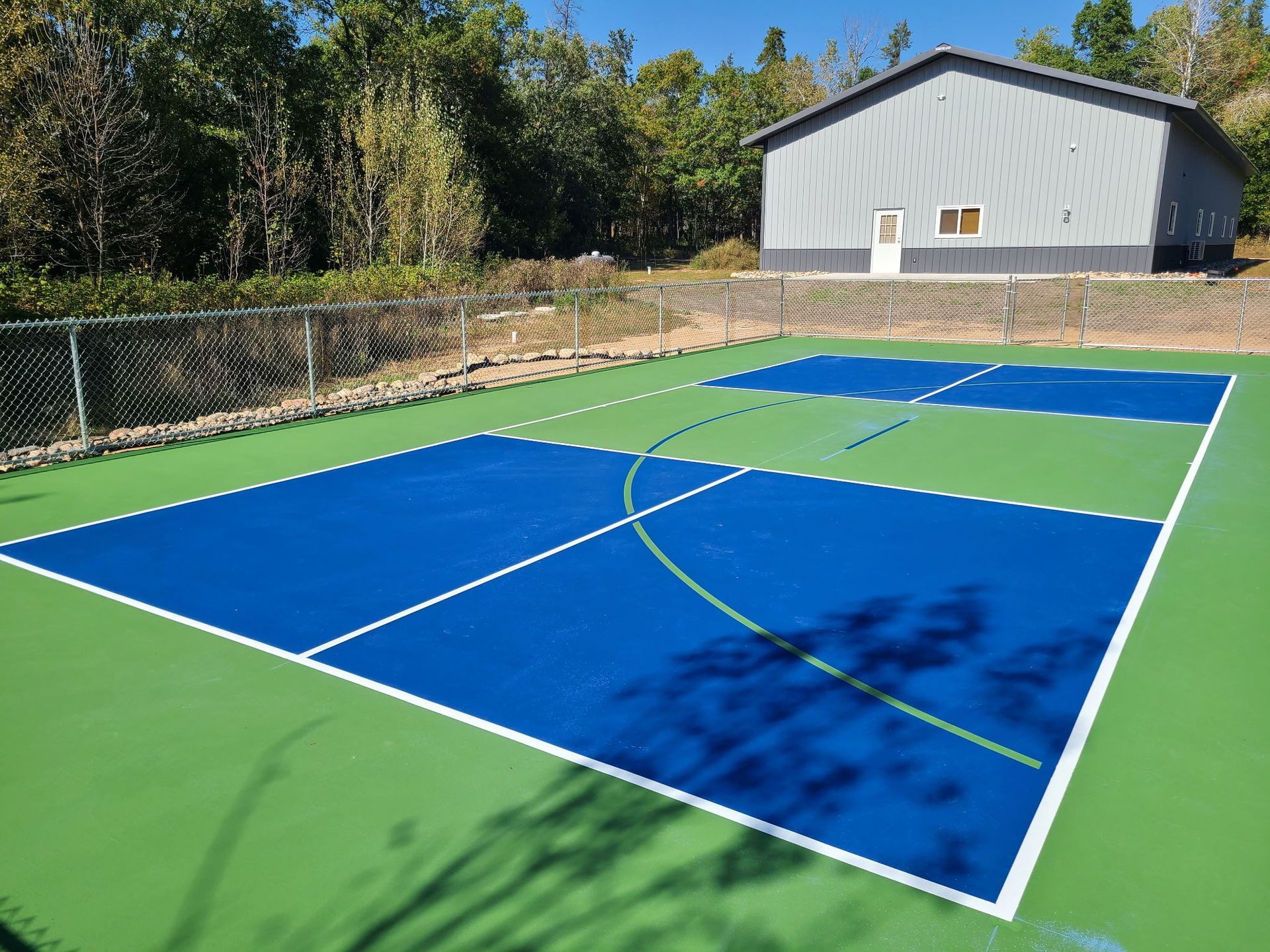

Repair, Resurface, or Rebuild an Old Court? How to Tell Which You Need
Quick Answer: Choose the fix by the condition of the base, not the look of the surface. If the cracks are thin, stable, and isolated, repairs plus a fresh coating are usually enough. If the color is chalky, the lines are worn, and the surface is slick but the slab is flat and drains, a full resurface is the right level. If cracks reopen after being filled, sections have lifted or sunk, cracking has linked into a web, or water never clears from the same areas, the base is failing and a rebuild is the honest answer. Putting a new surface over a moving base only hides the problem for a season or two.
You are standing at the fence in the first warm week of spring, looking at a court that was your pride a decade ago. The color has gone chalky. A crack runs from the net post toward the baseline. There is a shallow puddle near the service line that was not there two summers ago. Three different people have told you three different things: patch it, repaint it, or tear it out. Each of them sounded sure.
The trouble is that all three can be right, depending on what is happening under the surface. A court is a layered system, and the layer you can see is the one that matters least in deciding how far the work needs to go. Here is how a builder sorts an old court into repair, resurface, or rebuild, and how you can do most of that sorting yourself before anyone sets foot on your site.
Start With the Base, Because Everything Else Follows It
Think of an old court as three things stacked together: the soil and stone base, the pavement or slab on top of it, and the thin color and texture coating you actually play on. The coating is the easiest layer to renew and the most visible, which is why it gets all the attention. The base is the hardest layer to fix and the one that decides how long any repair will last.
So the first question is always the same: is the base still doing its job? A sound base is flat, drains, and holds the pavement steady through the seasons. A failing base moves, holds water, or lets the pavement above it break apart. Every symptom you see on the surface is either a surface problem that a coating can solve, or a base problem wearing a surface disguise.
Surface Problems Stay On The Surface
They show up as fading, chalking, worn lines, a slick feel, and thin hairline cracks that look the same year after year.
Base Problems Keep Moving
They show up as cracks that widen or return, sections that sit higher or lower than their neighbors, and water that settles in the same places no matter how many times the court is coated.
If you remember only one thing from this article, remember that split. It sorts almost every old court correctly.
When Repair Is Enough
Repairs make sense when the damage is limited, stable, and not connected to anything bigger. Most courts reach this stage within their first several winters, and caught early it is the easiest level of work.
Thin, Isolated Cracks
A hairline crack that has stayed the same width for a couple of seasons is usually a surface stress line. Cleaning it out and sealing it with a flexible filler keeps water from getting in, which is what actually makes cracks grow.
One Or Two Shallow Low Spots
A shallow depression that dries out soon after rain can be leveled with a patch material during a resurfacing visit. It is a cosmetic and playability issue, not a structural one.
Small Coating Failures
A few spots where the coating has lifted, usually near a drain point or along an edge, can be cut back and recoated.
The test for repair is simple. If you fixed it and the same problem came back within a season, you were never looking at a repair candidate. You were looking at a base problem that happened to start small.
TIP: Take a photo of every crack with a tape measure or coin beside it each spring and each fall, from the same spot. Two seasons of matching photos tell you whether a crack is stable or still moving, and that single fact separates a repair from a rebuild better than any other check you can make yourself.
When a Full Resurface Is the Right Level
Resurfacing means renewing the whole playing coating: cleaning the surface, repairing the cracks and low spots, applying new filler and color coats, and laying down fresh lines. It restores traction, color, and a uniform feel across the entire court. It does not change what is under the pavement, so it works when the pavement and base are fundamentally healthy.
A court is a good resurfacing candidate when you see a pattern like this:
Color Is Faded And Chalky Across Large Areas
Sunlight breaks down the binder in the coating over time. When you rub a hand across the surface and it comes away powdery, the coating is aging out.
The Texture Has Worn Smooth
Baselines and the area around the net wear first. A court that feels slick when damp is a safety concern, and a renewed texture fixes it.
The Lines Are Ghosted Or Peeling
Worn markings are a coating problem, and a new coating brings them back.
Cracks Are Present But Stable
A scattering of fine cracks that have not grown can be filled, then covered with a new coating system.
Water Drains
After a rain, the court dries in a reasonable time, with at most a few shallow spots.
If that describes your court, you are looking at a surface that has simply aged, and a resurface is the right, proportionate answer. Many courts in this condition can be renewed several times over their lives, as long as the base underneath stays sound.
Signs the Court Needs to Be Rebuilt
A rebuild means removing the failed pavement, often by milling it down to the stone base, correcting the base and its drainage, and installing new pavement and a new surface system. It is the biggest job, and it is the right one when the problem is structural. These are the signs we treat as pointing that direction:
Cracks That Reopen After Being Filled
If a filled crack splits again within a season or two, something underneath is still pulling it apart. More filler will not change that.
A Web Of Connected Cracks
When cracks branch and link into an alligator pattern, the pavement is breaking up from below, often after years of water working into the base.
Sections That Have Lifted Or Sunk
Stand at one end of the court and look along the surface at eye level. A ridge, a dip, or a step between neighboring slabs means the ground is moving.
Water That Never Leaves
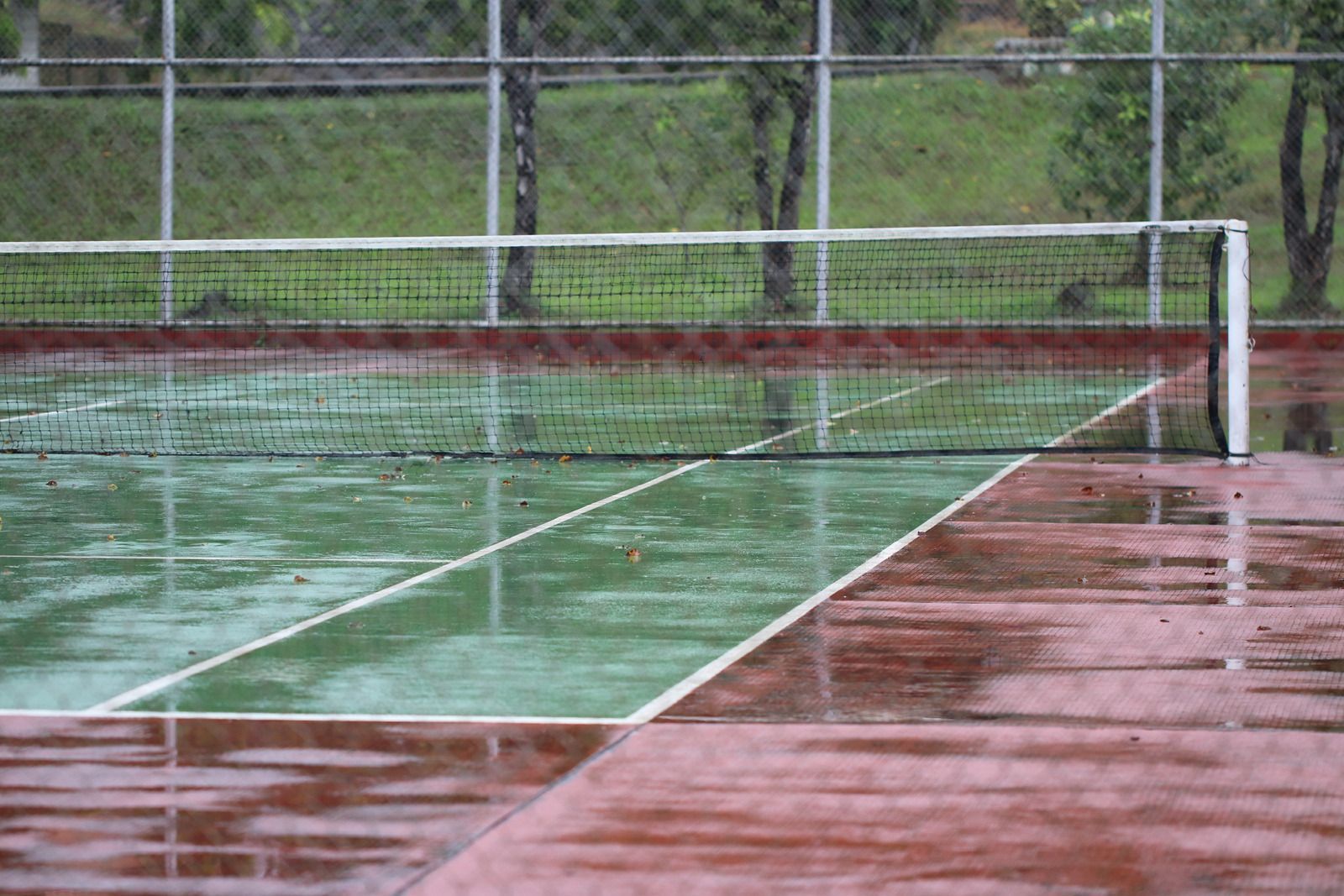
A puddle that sits in the same place long after the rest of the court has dried points to a grading or base problem that coatings cannot correct.
Roots Lifting The Edges
Trees near the court can push up pavement from below, and the damage spreads from there.
Crumbling Edges
If the perimeter is breaking away, the support at the edge has usually washed out or frozen apart.
One of these on its own deserves a close look. Two or three together usually settle the question.
Why Our Winters Push Courts Toward the Rebuild Side
In Central and Northern Minnesota, the base takes a beating that courts in warmer places never see. Soil that holds moisture freezes and expands, and in some soils the freezing pulls more water upward and lifts the ground in uneven patches. The depth of frost changes with each winter, and a bare, snow free stretch of ground freezes much deeper than ground under an insulating blanket of snow. Then spring arrives, the top layer thaws while the ground below is still frozen, and the saturated base sits soft and weak with nowhere to drain.
A court with a well built, free draining base rides that out for decades. A court with a thin base, poor compaction, or a drainage path that does not work shows the damage early, and the damage compounds. Each winter water enters the cracks, freezes, and widens them. That is why a crack that looks harmless in October can be the start of a rebuild conversation by April, and why the honest diagnosis for older Minnesota courts so often comes back to the base.
The Overlay Trap: Why Adding Another Layer Is Not a Middle Option
Some contractors offer a fourth choice that sits between resurfacing and rebuilding: laying a new layer of asphalt over the old court. It sounds sensible, and sometimes it has a place, but you should understand what you are buying.
Old Cracks Come Back Through
The movement that opened the original cracks is still there. A cracked pavement under a new overlay will usually reflect those same lines up through the new layer, sometimes within a few winters.
The Surface Gets Higher
Adding thickness raises the playing surface. On a court with fixed posts and fencing, that changes net height clearances, the relationship between the surface and the fence bottom, and the sleeves that hold the posts. Those details have to be reworked or the court plays and looks wrong.
It Makes The Next Rebuild Harder
More layers means a deeper pavement section to remove when the court does finally need to be rebuilt.
An overlay can be reasonable on a court whose base is sound but whose pavement is badly worn, and where the equipment and fencing can be adjusted to suit. On a court with a moving base, it only postpones the same decision.
A Walk Around Your Own Court: Five Checks
You do not need special equipment to get a good read on your court. Pick a dry day after the spring thaw and work through these.
Look Along The Surface At Eye Level
Crouch at one end and sight down the court. Ridges, dips, and steps show up much more clearly from low down than from standing height.
Map The Cracks
Walk the full court and mark each crack with chalk. Note which are single lines and which branch into networks, and which line up with the edges or the net.
Run The Rub Test
Press your palm firmly on a faded area and drag it across the surface. A powdery film on your hand means the coating is chalking, which is a surface issue.
Do A Water Check
After a rain, or after wetting the court with a hose, watch where water pools and how long it takes to clear. Persistent pooling in the same places matters more than a one time puddle.
Check The Edges And Surroundings
Look at the perimeter for crumbling, gaps, or roots, and at the ground around the court for slopes that send runoff toward it.
WARNING: Do not coat over a court that still holds standing water or has cracks you have not dealt with. Color systems need a dry, sound surface to bond, and pooled water or open cracks will break through the new coating, often within the first winter. Fix the water and the cracks first, or confirm the court passes a drainage check before any color goes down.
When the Signals Are Mixed
Real courts rarely fit one category. You might have a firm, flat court with good drainage but heavy chalking and a handful of stable cracks, which is a clear resurface. Or you might have one end that is heaving while the rest of the court is fine, usually because of a tree, a downspout, or runoff entering from one side.
In mixed cases, the question becomes whether the problem is localized or systemic. A localized failure caused by something you can remove or redirect, like roots or a draining gutter, can sometimes be corrected in that area, with the rest of the court resurfaced. A failure spread across the court, or one with no clear outside cause, usually points to the base as a whole.
Ask What Changed
A court that was fine for fifteen years and started failing recently may be reacting to something new nearby, such as a regraded yard or a changed drainage path. Fixing the cause matters as much as fixing the damage.
Ask How It Was Built
Courts built over uncompacted fill, organic soil, or with little stone base fail in predictable ways. Knowing the original construction, even roughly, helps your builder judge how much life the base has left.
Ask What You Want From It
A court that sees daily play, lessons, or tournaments deserves a different standard than a backyard court used on weekends. Players notice an uneven surface long before it becomes a hazard.
Planning the Work Around a Short Season
Whatever level of work you land on, Minnesota's building season is short and the weather decides what can be done. Asphalt needs mild temperatures to be placed and compacted properly, and acrylic color coatings need warm, dry conditions to cure, generally with temperatures holding at or above fifty degrees through the first day. Late fall and very early spring are poor times to count on.
That has a practical effect on the decision. Repairs and resurfacing are usually scheduled in the stretch from late spring through early fall. A rebuild takes longer and involves more weather sensitive steps, so it helps to have the conversation in winter or early spring and book the work well before the warm weather window arrives. Deciding in August often means the work waits until the following year.
Frequently Asked Questions
How do I know if my court needs a rebuild instead of a resurface?
Check whether the base is moving. Returning cracks, lifted or sunken sections, webbed cracking, and water that never drains signal base trouble. Faded color, worn lines, and stable fine cracks suggest a resurface instead.
Can I resurface over cracks if they are not too wide?
Stable hairline cracks can be cleaned, filled with flexible material, and covered during a resurface. Wider or previously filled cracks need assessment first, since covering ongoing movement lets them reappear through the coating.
How long does a court usually last before it needs one of these?
It depends on construction and care, not just age. A court with a sound base can be resurfaced several times over decades, while a weak base may need major work much sooner.
Is an overlay the same as a resurface?
No. A resurface renews the thin color and texture coating, while an overlay adds new asphalt over old pavement. Overlays raise surface height and often reflect old cracks, so they suit sound bases only.
Will one low spot mean I need a whole new court?
Not by itself. A single shallow depression that dries soon after rain can usually be leveled during a resurface. Several, deeper, or patterned low spots suggest a base or grading problem.
Can I walk the court myself before calling someone?
Yes, and it helps. Sight down the surface for ridges and dips, mark cracks, watch water after rain, and rub faded areas for chalk. Seasonal photos give your builder a useful record.
Matching the Work to What Lies Beneath
An aging court is not automatically a failing one. Faded color, worn lines, and a few stable hairline cracks usually call for repairs and a fresh coating, while cracks that keep returning, uneven sections, and water that never clears point to a base that is moving underneath. Reading those signs honestly, and tracking cracks with photos over a couple of seasons, makes it far easier to choose the right level of work without spending the effort or the season twice.
Harsh winters make that diagnosis even more important, since frost and spring thaw expose weak bases quickly and widen every open crack. Outdoor Specialties
brings 100
years of combined experience to courts across Central and Northern Minnesota, where a sound base often decides whether a surface lasts a few seasons or a few decades. With the right fix in place and work planned around the short building window, an old court can play true for many summers ahead.